XLPE/PVC insulated cables refer to electrical cables that use XLPE (cross-linked polyethylene) as the primary insulation and PVC (polyvinyl chloride) as the outer sheath or jacket. These cables are widely used in power distribution systems due to their durability, thermal performance, and cost-effectiveness.
XLPE/PVC insulated cables are electrical power cables with:
1.XLPE (Cross-Linked Polyethylene) insulation around the conductor.
2. PVC (Polyvinyl Chloride) outer sheath for mechanical and environmental protection.
This combination provides excellent electrical, thermal, and mechanical performance, making them suitable for a wide range of power distribution applications.
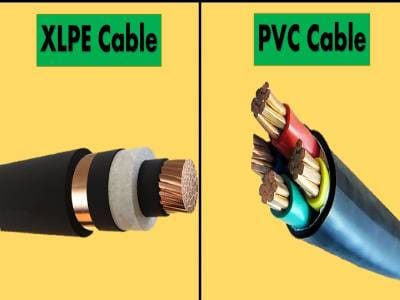
XLPE/PVC insulated cables structure
- Conductor: Usually copper or aluminum.
- XLPE Insulation:
- Provides electrical insulation.
- Has high thermal resistance (typically up to 90°C continuous operating temperature).
- Cross-linked structure improves chemical and mechanical properties.
- PVC Sheath:
- Acts as a protective layer against moisture, abrasion, chemicals, and mechanical impact.
- Flame-retardant and weather-resistant.
XLPE/PVC insulated cables Features
High thermal resistance
Up to 90°C for continuous operation, 250°C under short-circuit conditions
Mechanical strength
XLPE has excellent tensile strength and resistance to deformation.
Chemical resistance
XLPE is resistant to many oils and chemicals.
Ease of installation
PVC sheath offers good flexibility and durability.
Voltage range
Commonly used in low to medium voltage ranges (e.g., 600/1000V, 3.3kV, 11kV).
Flame Retardant
PVC sheath is flame-resistant and self-extinguishing.